One of the most common questions parents ask is simple: “How can I help my kid get better at baseball?”
The good news is you don’t need to be a former college player, a hitting instructor, or someone who knows every rule in the book. In fact, some of the best help parents provide has very little to do with mechanics.
Below are practical, realistic ways parents can support their child’s baseball development without overcoaching, added pressure, or frustration.
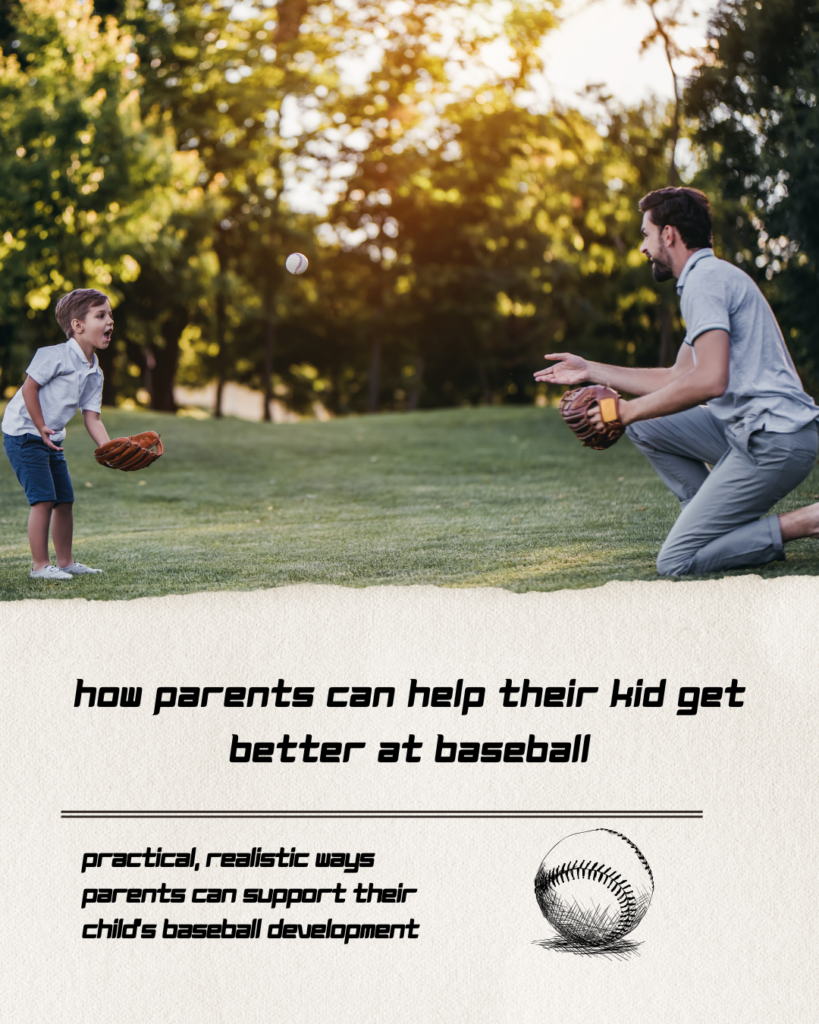
Start With the Right Mindset
Before drills, equipment, or extra practice, the mindset matters most.
Kids improve faster when they feel supported instead of evaluated. If every car ride home turns into a breakdown of mistakes, confidence drops fast.
A simple rule that works well for many families is this: let coaches coach, and parents encourage.
That doesn’t mean you can’t help. It just means your role should focus on effort, consistency, and enjoyment of the game.
Encourage Consistent (Not Excessive) Practice
You don’t need two-hour backyard workouts every day to see improvement.
Short, consistent sessions are far more effective, especially for younger players. Even 15–30 minutes a few times a week can make a noticeable difference.
At-home practice ideas include:
- Soft toss into a net
- Dry swings focusing on balance
- Playing catch with proper footwork
- Simple ground balls or fly balls
The goal isn’t perfection. It’s building comfort and confidence through repetition.
Focus on the Basics
Parents often worry about advanced mechanics, but most youth players improve fastest by mastering the basics.
That means:
- Good balance at the plate
- Keeping eyes on the ball
- Proper throwing motion
- Using two hands in the field
If your child looks comfortable doing the simple things, they’re on the right path.
Common Mistakes Parents Should Avoid
Looking at how parents can help their kid get better at baseball also included avoiding mistakes.
Even well-meaning parents can accidentally slow progress without realizing it.
One common mistake is offering constant mechanical advice during games. Games are for competing, not fixing swings. Save instruction for practice time, and let coaches handle in-game adjustments.
Another issue is comparing your child to teammates or opponents. Every player develops at a different pace, and comparisons often create unnecessary pressure.
Finally, avoid making baseball feel like a job. Too much criticism or forced practice can lead to burnout. When kids enjoy the game, improvement usually follows naturally.
What Parents Should Expect at Different Ages
Understanding age-appropriate development helps set realistic expectations and reduces frustration.
- Ages 6–8: Focus on fun, learning the basics, and developing coordination. Mistakes are normal and expected.
- Ages 9–11: Skills begin to improve quickly with repetition. Confidence and consistency matter more than performance.
- Ages 12–14: Players start refining mechanics and understanding the mental side of the game. Patience and encouragement are still key.
Progress looks different at every age, and steady improvement matters far more than early dominance.
Make Practice Fun
One of the biggest mistakes parents make is trying to coach mechanics without truly understanding them. If you want a better foundation, start by learning basic youth baseball hitting drills that focus on balance, timing, and contact.
Kids stick with the sport — and improve — when practice feels enjoyable. Turn drills into games. Keep score. Set small challenges. Celebrate progress.
If your child is laughing, smiling, and asking to keep playing, you’re doing it right.
Help Them Practice at Home Safely
Practicing at home is one of the best ways to get extra reps, but safety matters.
Using a quality hitting net, softer training balls, and enough space can make backyard or garage practice both effective and safe.
Parents don’t need a full setup — just reliable equipment that allows reps without chasing balls all over the yard.
Having the right equipment also makes a huge difference. Parents often ask if gear really matters at young ages, and the answer is yes—especially when it comes to bats and gloves. Choosing the best youth baseball bat for your child’s size and strength can instantly improve confidence and performance.
A properly fitted glove is just as important. Many kids struggle simply because their glove is too stiff or too large. Take time to review youth baseball gloves designed for younger players that are easier to break in and control.
Teach Effort, Not Results
Baseball is a game of failure. Even the best players fail far more than they succeed.
Instead of focusing on hits, errors, or stats, praise effort:
- Running hard
- Paying attention
- Bouncing back after mistakes
- Being a good teammate
These habits lead to long-term improvement far more than any swing tip.
Know When to Step Back
Some days your child won’t want extra practice. That’s okay.
Burnout is real in youth sports, and pushing too hard can backfire. If motivation dips, take a break and let the love for the game return naturally.
Progress in baseball isn’t linear. Trust the process.
According to USA Baseball, long-term player development should emphasize fundamentals, enjoyment, and gradual skill progression rather than early specialization.
Final Thoughts for Baseball Parents
If you’re wondering how parents can help their kid get better at baseball, the answer doesn’t require expert knowledge or expensive lessons.
Helping your kid get better at baseball doesn’t require expert knowledge or expensive lessons.
Consistency, encouragement, and creating opportunities to practice safely at home go a long way. When kids feel supported and enjoy the game, improvement usually follows.
If you’re looking for simple ways to help your child practice more at home, check out some of the baseball training equipment and drills recommended throughout this site.
And remember — your support matters more than you think.
Leave a Reply